Case Study6 min read
From Claim Spreadsheets to a Command Center: A Green Energy Story
A behind-the-scenes look at moving insurance claims for 300+ legal entities out of spreadsheets and into a governed 13-stage lifecycle.
Read articleGreen Energy Corp
Utility-scale solar & wind energy producer
A leading green energy producer replaced spreadsheet-based insurance claim tracking across hundreds of legal entities with a governed 13-stage claims lifecycle on DocQ — AI-powered document intake, parallel financial tracks, and a complete audit trail on every claim.
legal entities, one platform
governed lifecycle stages
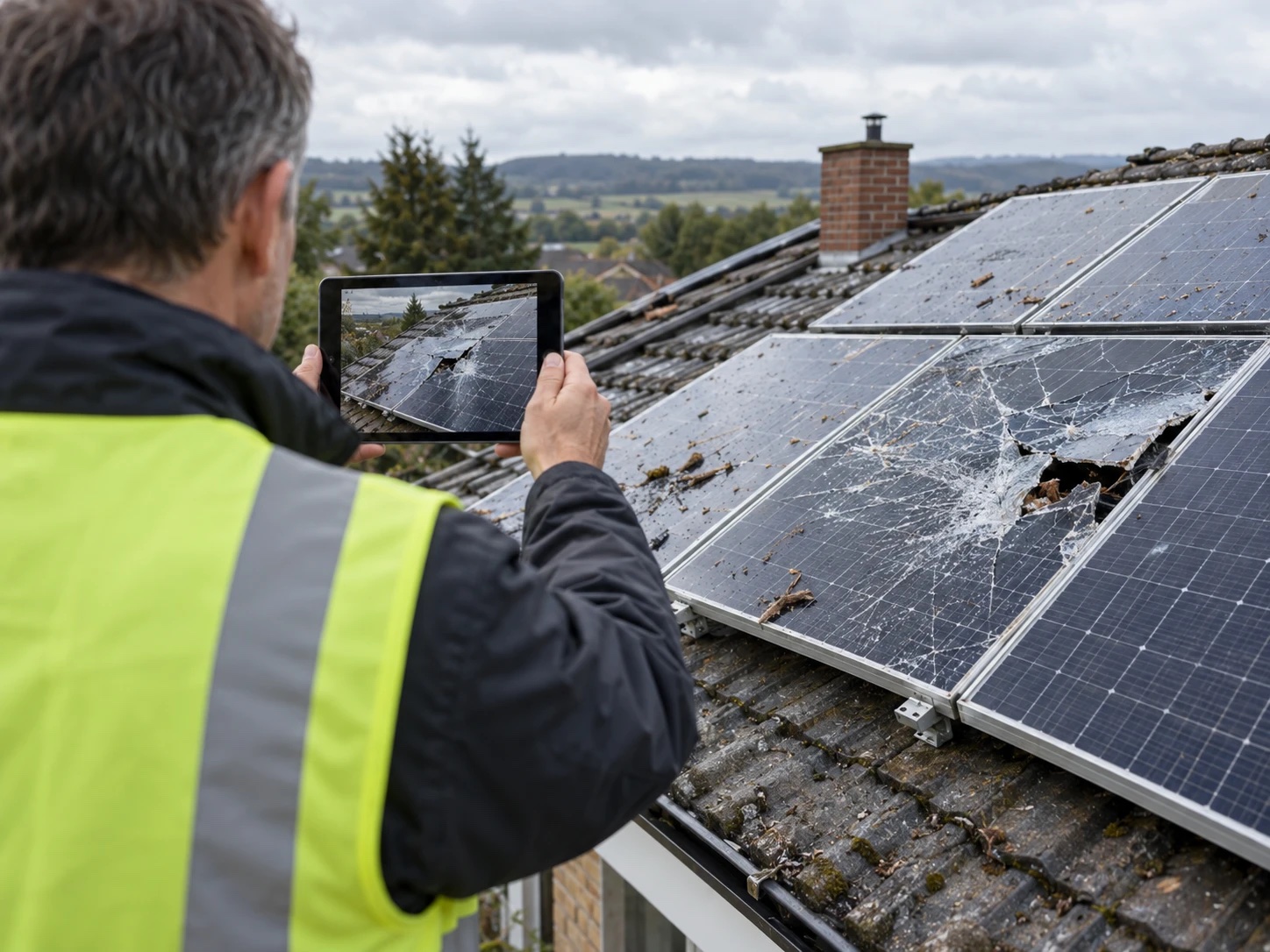
The company operates utility-scale solar and wind assets held across more than 300 special-purpose legal entities. Every storm, equipment failure, or transmission incident can produce an insurance claim — each with its own policies, assessors, and settlement timeline.
Industry
Renewable Energy
Scale
300+ SPV legal entities
Assets
Utility-scale solar & wind
Users
Insurance, finance & site teams
Claims lived in spreadsheets. Each claim carried two parallel financial tracks — Material Damage and Loss of Profit — and each track had its own estimates, broker assessment, surveyor assessment, and payment milestones. Multiply that by hundreds of entities and dozens of open claims, and the spreadsheet model broke down: no single source of truth, no stage discipline, no visibility into what was blocking a settlement.
Supporting documents — policies, surveyor reports, broker correspondence, payment advices — were scattered across inboxes and shared drives. Reconstructing the history of a single claim for an auditor or a renewal negotiation meant days of archaeology.
The mandate from finance leadership was clear: one system that enforces the claims process end to end, keeps every document attached to its claim, and shows the portfolio position at a glance.
Claim registers maintained by hand across hundreds of legal entities, with no shared view.
Material Damage and Loss of Profit each need estimates, assessments, and payments — tracked in lockstep.
Claims drifted between states with no gating — missing data discovered only at settlement.
Policies, surveyor reports, and payment advices spread across inboxes and drives.
Every claim moves through a strictly ordered lifecycle — intimation to paid — with mandatory fields enforced at each gate and controlled withdrawal until payment.
Claims, entities, policies, and both financial tracks modeled in DocQ Object Management — one queryable source of truth instead of parallel spreadsheets.
Incoming claim documents are classified automatically, and DocQ's zero-training extraction pulls assessed amounts, deductibles, dates, and references from surveyor reports, broker assessments, and payment advices straight into the claim record.
A dedicated claims workspace served from the DocQ instance, with roles derived from DocQ teams — insurance, finance, and site users each see exactly what their role allows.
Every stage transition, document, and value change is recorded on the claim — audit and renewal evidence is a query, not a reconstruction.
Open exposure, stage bottlenecks, and settlement progress visible across the full claim portfolio — with AI-powered dashboards answering questions in plain language.
Claim registers in per-entity spreadsheets
One structured claim record per incident, portfolio-wide
MD and LoP tracked in separate tabs
Both financial tracks on the claim, always in sync
Stage changes by convention
13 gated stages with mandatory-field enforcement
Documents in inboxes and drives
AI-classified, extracted, and filed to the claim
Audit prep measured in days
Complete claim history in one query
Customer identity withheld at their request.
Go deeper into the claims transformation with these detailed articles.
A behind-the-scenes look at moving insurance claims for 300+ legal entities out of spreadsheets and into a governed 13-stage lifecycle.
Read articleA technical deep dive into the claims platform — gated lifecycle stages, parallel financial tracks, AI document intake, and a role-scoped portal.
Read articleA finance perspective on claims automation — portfolio visibility, faster settlements, audit-ready claims, and stronger renewal positions.
Read articleOne platform to structure your data, automate your processes,
and free your people — with AI baked in.
Every manual step eliminated is a compounding speed advantage.
What are you still doing manually that DocQ could handle instantly?